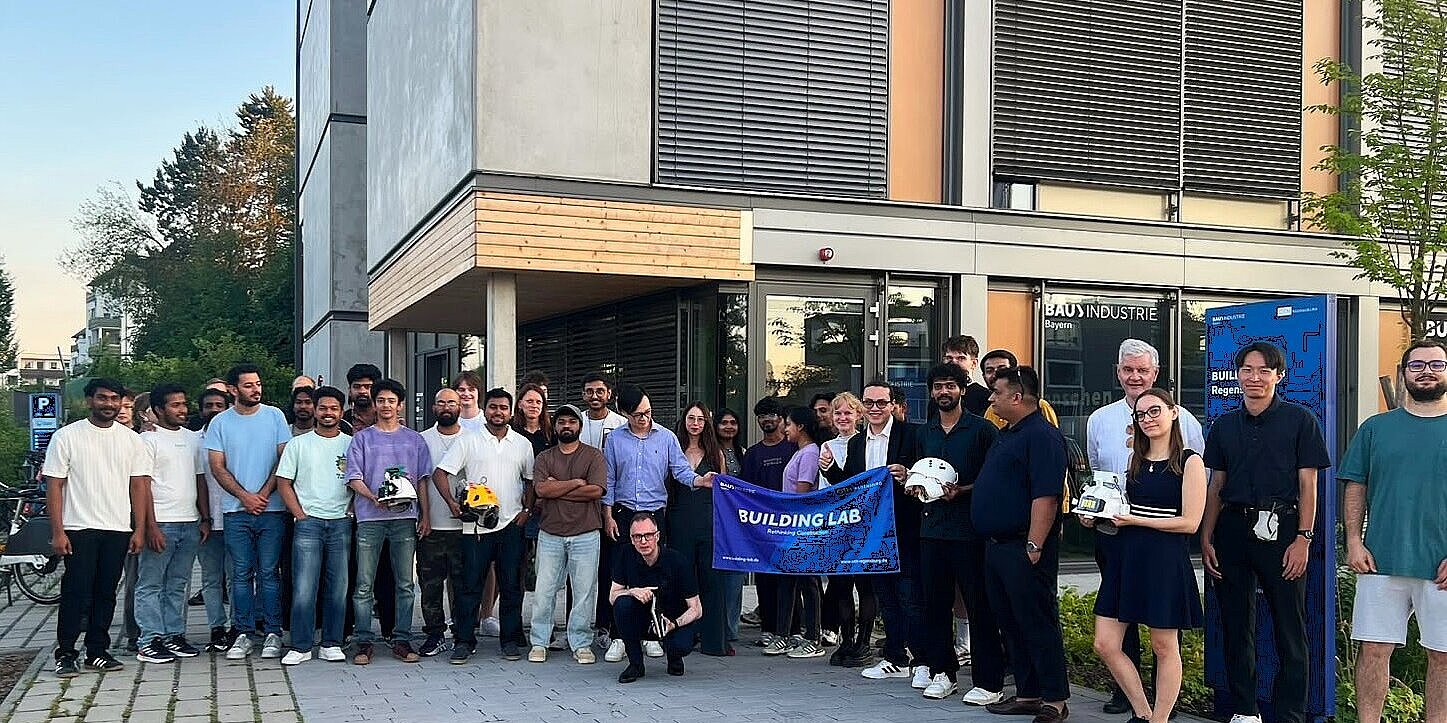
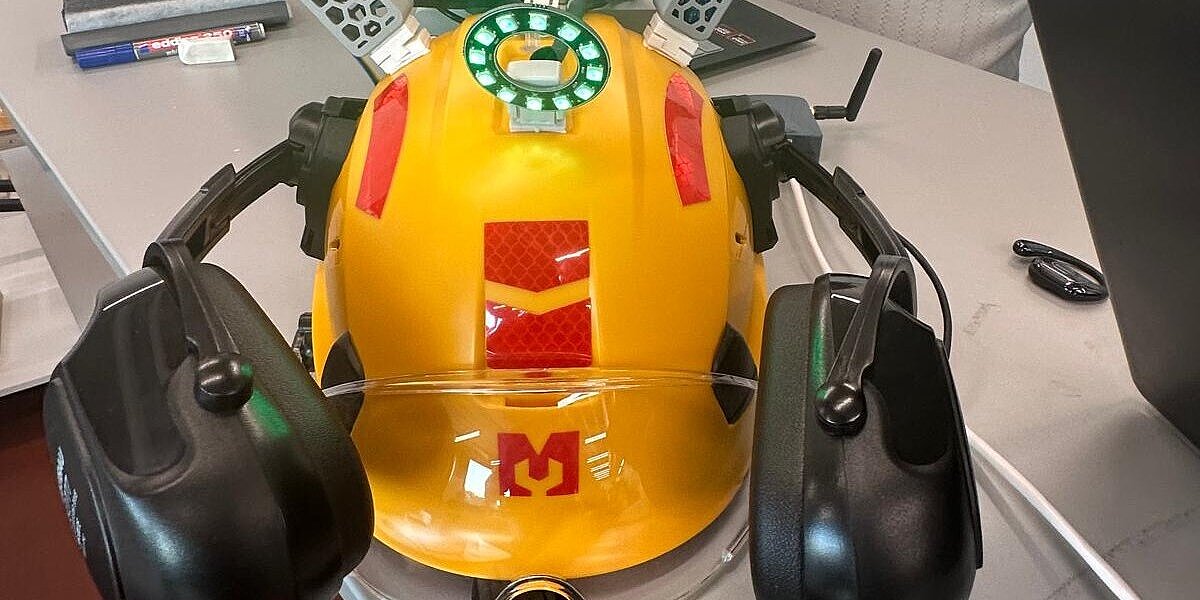
Studierende der OTH Regensburg entwickelten im Building Lab der Fakultät Bauingenieurwesen im Rahmen eines interdisziplinären Cobots-Kurses Konzepte für einen KI-gestützten Smart Helmet. Im Mittelpunkt stand die Frage, wie Bauarbeiterinnen und Bauarbeiter, digitale Zwillinge, KI-Systeme, mobile Roboter, Drohnen und autonome Baumaschinen künftig intelligent miteinander vernetzt werden können.
Der Smart Helmet wurde dabei als intelligente Schnittstelle zwischen Mensch, Baustelle und robotischen Assistenzsystemen gedacht. Die Teams untersuchten unter anderem Mensch-Roboter-Koordination, Aufgabenverteilung, natürliche Interaktion, KI-gestützte Entscheidungsunterstützung, Sicherheit, Ergonomie und smarte Baustellenlogistik.
Unterstützt wurde der Kurs durch Praxis- und Forschungspartner wie PORR, Waseda University, City University of Hong Kong, Bouygues Construction und D&Z Bauunternehmung GmbH.
Ausgewählte Konzepte sollen nun gemeinsam mit Industriepartnern in erweiterten Feldtests weiterentwickelt und unter realitätsnahen Bedingungen erprobt werden.
Der Kurs wird in jedem Semester bei der Regensburg School of Digital Sciences (RSDS) unter der Koordination vom Zentrum für interdisziplinäre Lehre (ZIL) angeboten.
Cobots ist sowohl für Einsteiger ohne Programmier-/Robotik-Vorkenntnisse als auch für Fortgeschrittene mit sehr guten Programmierkenntnissen geeignet. Die Teilnahme ist auch in Englisch möglich.
As part of an interdisciplinary course on cobots, students at OTH Regensburg developed concepts for an AI-powered smart helmet in the Building Lab of the Faculty of Civil Engineering. The focus was on how construction workers, digital twins, AI systems, mobile robots, drones and autonomous construction machinery can be intelligently networked with one another in the future.
The smart helmet was conceived as an intelligent interface between people, the construction site and robotic assistance systems. Among other things, the teams investigated human-robot coordination, task allocation, natural interaction, AI-supported decision-making, safety, ergonomics and smart construction site logistics.
The course was supported by industry and research partners such as PORR, Waseda University, City University of Hong Kong, Bouygues Construction and D&Z Bauunternehmung GmbH.
Selected concepts are now to be further developed in collaboration with industry partners through extended field trials and tested under realistic conditions.
The course is offered each semester at the Regensburg School of Digital Sciences (RSDS), coordinated by the Zentrum für interdisziplinäre Lehre (ZIL).
‘Cobots’ is suitable both for beginners with no prior knowledge of programming or robotics and for advanced students with very good programming skills. Participation is also possible in English.